
Pure Imagination Scrapbook
Sponsors and Grantors

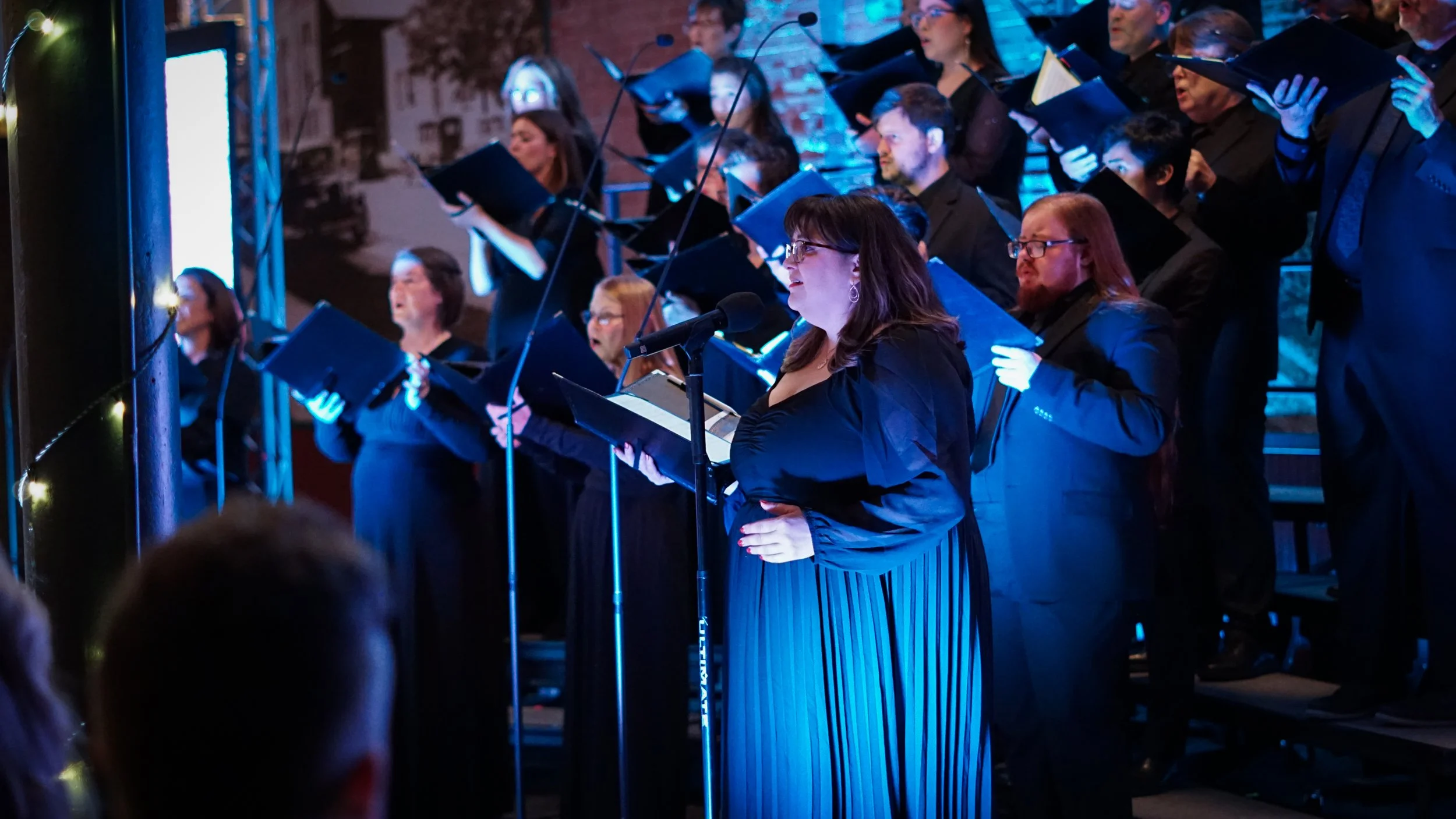
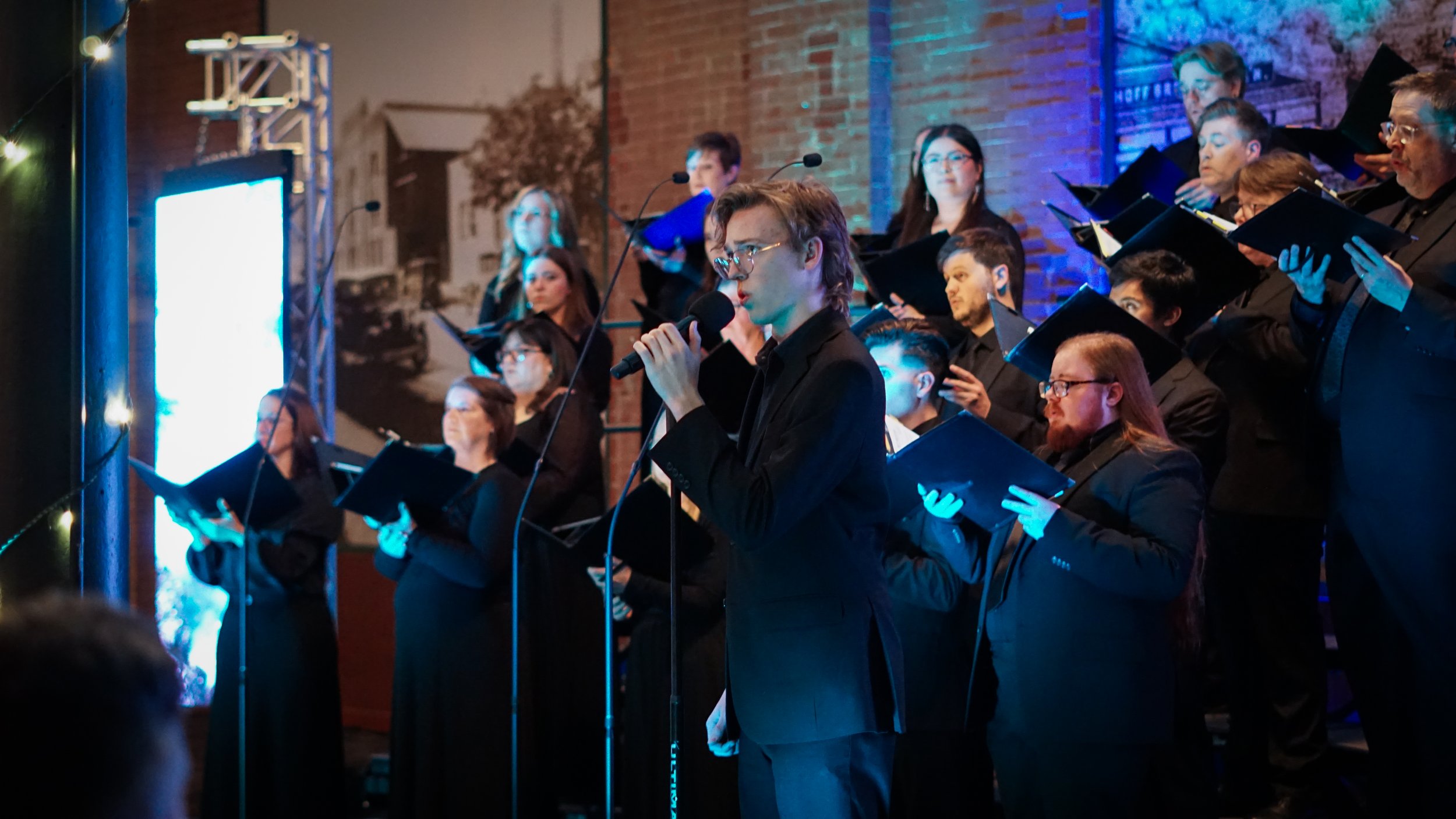
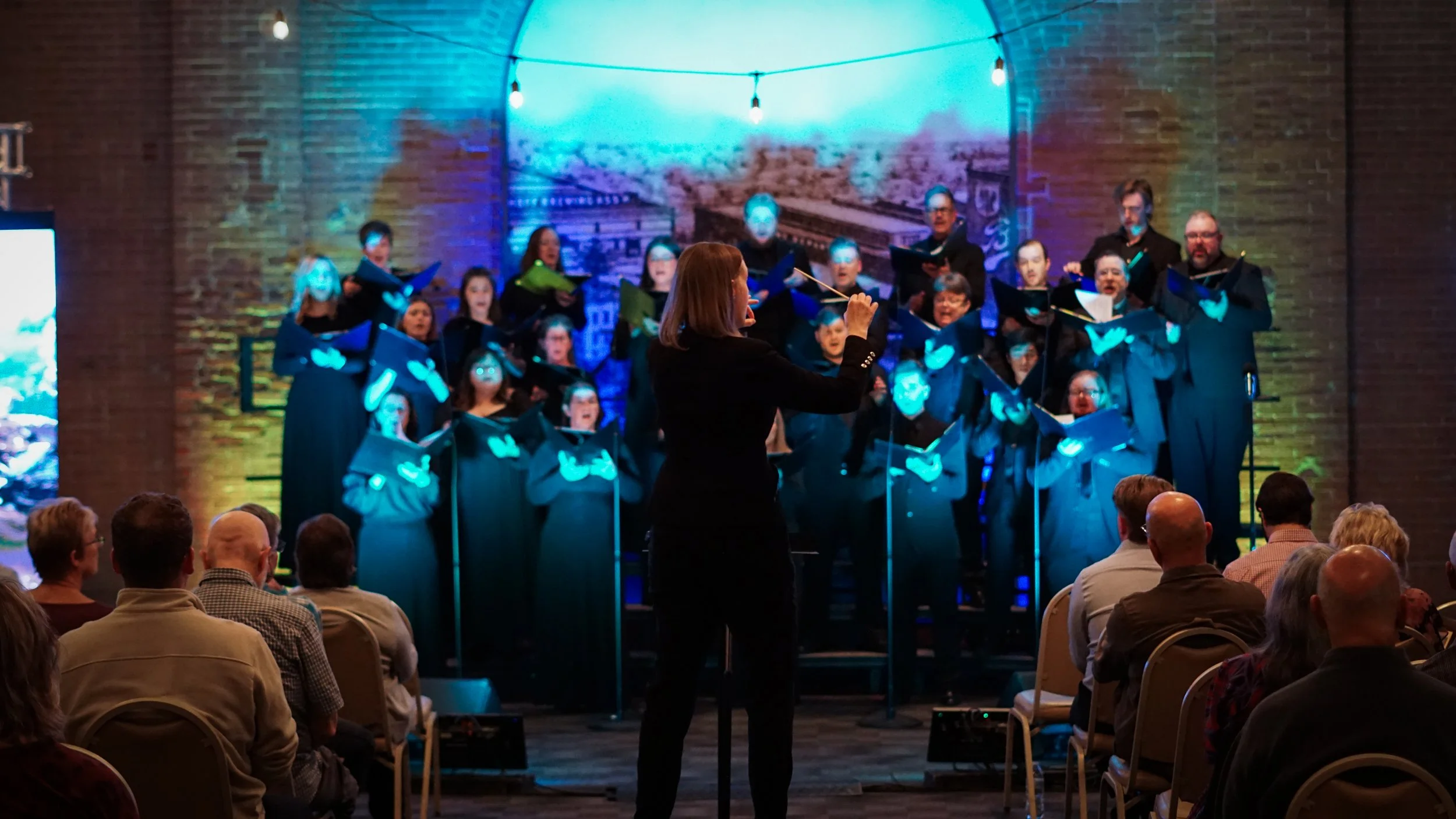
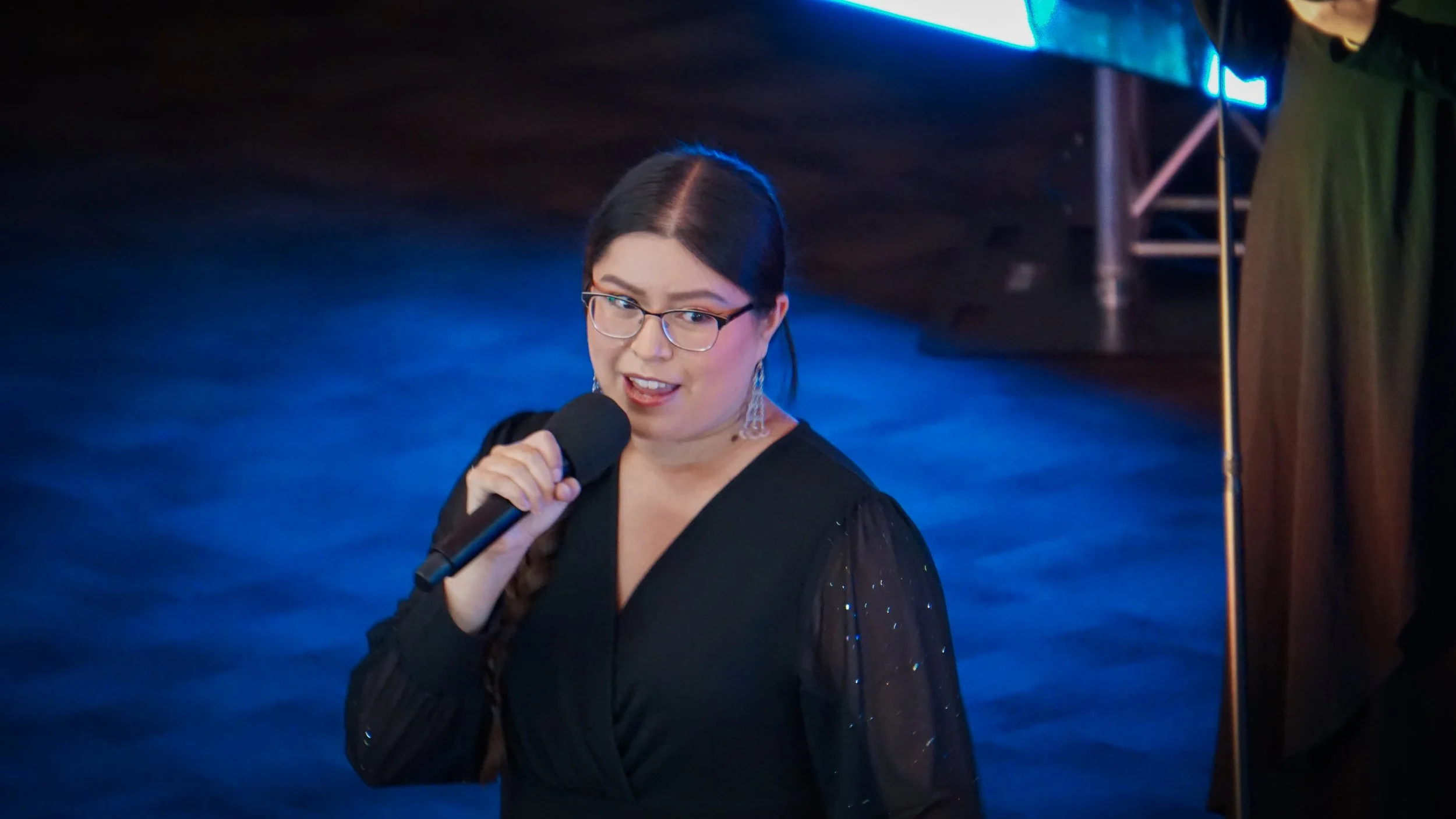
Pure Imagination Program Notes
Welcome to Pure Imagination, a concert that will transport you to the fantastical worlds of Hogwarts, Narnia, and Middle-Earth through rich choral pieces penned by a variety of composers who were inspired by equally remarkable authors. Below, you will find background information about each piece you will hear in today’s program. I’ve grouped information by film franchise.
We begin with a song many know from Willy Wonka and the Chocolate Factory. Originally sung by Gene Wilder, today we use this piece as an invitation into a “world of pure imagination.” I hope it sets the stage for a magical concert for you!
-Natalie Young
Harry Potter
Based on J.K. Rowling’s beloved wizarding world, we begin with music from the Harry Potter films. The scores accompanying the story, which was divided among eight films, were written by four illustrious composers: John Williams (films 1-3), Patrick Doyle (film 4), Nicholas Hooper (films 5-6), and Alexandre Desplat (films 7-8). Probably the most iconic musical piece from the films is “Hedwig’s Theme,” which will serve as a nice feature for our band today. This piece represents the most memorable musical themes from the Harry Potter movies. Heartland’s own Reggie Berg has created a fine arrangement for the band to play for today’s concert. The piece begins with the main theme (Hedwig’s Theme) followed by the Flying Theme, then returning to the main theme and finishing with a coda.
Next, you’ll hear the Hogwarts school song, “Hoggy Warty Hogwarts,” which is a lighthearted ode to the school that houses witches and wizards during their seven years of study.
Featured in the film Harry Potter and the Prisoner of Azkaban, “Double Trouble” is performed by Hogwarts’ Toad Choir during the Welcome Feast at the beginning of Harry’s third year at Hogwarts. The text, which comes from the famous three witches scene in Shakespeare’s Macbeth, and medieval musical quality give the piece a dark and enchanting mood.
“In Noctem” was played in a deleted scene from Harry Potter and the Half-Blood Prince. The piece itself echos the ominous moment when light gives way to darkness. Here, the characters face difficulties of dark changes and impending demise. The Latin text you hear in the tenor and bass parts are an exact translation of the English text, which is sung by the sopranos and altos.
The final piece in our Harry Potter section is “My Love Is Always Here,” from Harry Potter and the Deathly Hallows - Part 1. It is, in fact, a Christmas carol sung by parishioners at a Christmas Eve service. In the scene, Harry & Hermione are visiting a graveyard at Godric’s Hollow, where Harry’s parents were buried. The piece’s text could allude to the nativity, but is also meaningful as a peaceful lullaby as the singers encourage the listener that “night is nearly through.”
The Chronicles of Narnia
Based on the classic children’s fantasy books by C.S. Lewis, The Chronicles of Narnia films feature a lush soundtrack by Harry Gregson-Williams. While much of the choral music in The Chronicles of Narnia is so heavily orchestrated that we could not use it for this concert, I chose to feature two songs that were written by popular artists for The Chronicles of Narnia: The Lion, the Witch, and the Wardrobe soundtrack.
“Can’t Take It In” was written and recorded by Imogen Heap and Harry Gregson-Williams for the film in 2005, and it was nominated for the Grammy Award for Best Song Written for Motion Picture at the 49th Annual Grammy Awards. This piece displays Heap’s mastery of electronic music, but today’s arrangement takes Heap’s original and voices it for 5-part a cappella choir plus a soloist. The result is cascading vocal lines and interesting cacophonous textures. The lyrics describe being awestruck by the beauty of a new place, so much so that the senses are overwhelmed.
“Wunderkind” was written by Alanis Morissette after she saw a rough cut of the film, and was so inspired by it that she wrote the song on a Friday, recorded it on Saturday, and delivered it to producers on Sunday. The song is from the point of view of the youngest Pevensie child, Lucy. True to most Morissette songs, the lyrics are highly poetic; they project a mood of wonderment and bravery, and the innocence of a young girl.
The Hobbit
Released from 2012-2014, the three The Hobbit films are based on J.R.R. Tolkien’s children’s fantasy novel of the same name, with music written by Canadian composer Howard Shore. The Hobbit tells the story of dwarves determined to recover their homeland and treasure from the dragon Smaug, who has taken up residence in the Lonely Mountain. They recruit the hobbit Bilbo Baggins to help them. The pieces you’ll hear today, “Misty Mountains” and “Song of the Lonely Mountain,” both refer to the dwarves’ desire to return home and find their “long forgotten gold.” In the story, the dwarves must pass over the Misty Mountains to get to the Lonely Mountain, their ancient home.
“The Last Goodbye” is the ending credits song from The Hobbit: The Battle of the Five Armies, and was co-written and originally sung by Billy Boyd, who played Pippin Took (another hobbit) in The Lord of the Rings trilogy. Appropriately titled, the song is about camaraderie and saying goodbye at the end of a journey.
The Lord of the Rings
Drawing plots and titles from the original books by J.R.R. Tolkien, The Lord of the Rings film trilogy was released from 2001-2003. The scores for all three films were written by Howard Shore, although some of the music we are singing today comes from a handful of additional artists. Shore’s score is well-known for its leitmotifs (short recurring musical phrases representing different characters) and themes representing different cultures.
We begin with another musical feature for our band entitled “The Shire” and alternatively known as “Concerning Hobbits”, arranged by Reggie Berg. You will hear the Shire leitmotif at the very beginning of the piece, as it invokes a sense of warmth and rustic comfort.
Created and sung by New Zealand composer David Long and band Plan 9, “The Passing of the Elves” is heard by the hobbits Frodo and Sam soon after they leave on their journey to destroy the One Ring. In the scene, they see wood elves passing by on their way to the Grey Havens. This enchanting and stately procession is a reminder of the mystery that awaits them on their journey. You’ll notice that the piece is sung in Elvish, one of the fictional languages J.R.R. Tolkien created for his legendarium. You will hear two Elvish languages sung in this concert: Sindarin and Quenya. Special thanks to Seth Allen for his work with the choir on pronunciations and translations of the languages!
Written for the first film of the trilogy, “May It Be” shares a message of hope in the midst of a difficult journey. It was written and recorded by Irish singer Enya, and is featured during the end credits of the film.
I have grouped the next four pieces into a medley, as they are similar in style and taken directly from the films
“Lament for Gandalf” is just that - a lament. It is sung after the wizard Gandalf tragically falls into the abyss of the Mines of Moria. Well-known throughout Middle-earth, Gandalf is mourned by the elves in Lothlórien, where the remainder of the Fellowship briefly rest before journeying on. You will hear both Elvish languages represented here. The solo part is in Quenya while the choir sings in Sindarin.
Next, “Evenstar” is named after the pendant that the half-elven princess, Arwen, gives to Aragorn, the heir of Gondor, to promise her love to him. The piece is sung in the second film during a flashback that Aragorn has before reaching Helm’s Deep (one of the largest battle sequences of the trilogy). Sung in Quenya, “Evenstar” is, at its core, a love song.
“Isengard Unleashed” is a considerably reduced version of the original track, however you will still hear two iconic melodies. First is another lament, “Haldir’s Lament,” which is quite similar melodically and harmonically to “Lament for Gandalf.” We immediately transition to “The March of the Ents”, and finally, the tenors and basses enter with the soprano soloist as the march continues.
In our medley, Isengard gives way to “The Edge of Night”, famously sung by Billy Boyd (as Pippin Took) in the third film of the trilogy. In this scene, Pippin, having given an oath to serve Denethor, the Steward of Gondor, is ordered to sing a song while Denethor eats and Faramir, Denethor’s son, is sent on a doomed military mission to reclaim Osgiliath from the forces of evil. In the film, the contrast of the solo voice over a gruesome battle sequence is striking.
To close today’s concert, we will sing “Into the West, “ from the final film, The Lord of the Rings: The Return of the King. This song was made popular by Scottish singer-songwriter Annie Lennox. In 2004, it won Academy, Golden Globe, and Grammy awards. The song explores themes of rest after a long journey, transitioning peacefully into death, and longing and questioning for those left behind.