
Thanks to our sponsors:
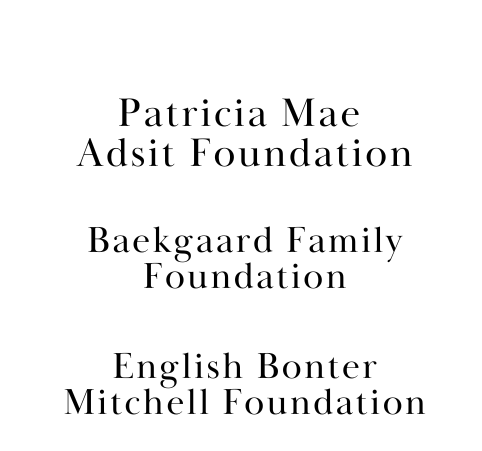


Made possible through these granting organizations:

Program Notes & Texts
Lost in the Night
Program note
Lost in the Night is a hymn based on a Finnish folk melody whose text was originally a secular love song. In 1929 Olav Lee, a Norwegian-American pastor, translated the original song into a religious text, and it has been used in Nordic-American Lutheranism ever since. Today’s arrangement comes from Norwegian composer and founder of The St. Olaf Choir, F. Melius Christiansen. I chose this piece to begin our program because it drops us into the dark night where we “long for morning, the darkness to vanquish.” From this posture may we more intimately experience the light that the rest of the concert will soon reveal. Listen for how anticipation builds as the soprano soloist’s proclamation of light’s arrival soars over the choir’s repetition of “He is coming soon”. –Natalie Young
Text (Traditional; translation by Olav Lee)
Lost in the night doth the heathen yet languish,
Longing for morning, the darkness to vanquish,
Plaintively heaving a sigh full of anguish:
Oh! Will not day come soon?
He is coming soon.
Sorrowing brother in darkness yet dwelling,
Dawned has the day of a radiance excelling,
Death’s dreaded darkness forever dispelling,
Lo, Christ is coming soon.
Light o’er the land of the heathen is beaming,
Rivers of life are streaming.
Millions yet sigh for the Savior redeeming.
He is coming soon.
Must we be vainly awaiting the morrow?
Shall we, no light and no comfort him borrow?
Giving no heed to his burden of sorrow:
Oh, will not day come soon?
He is coming soon.
Blow, Blow, Thou Winter Wind
Program note
This bitter-sweet song is sung in the final scene of Act II of As You Like It by Amiens, a follower of the exiled Duke Senior who is living a Robin Hood-like life in the Forest of Arden, having been robbed of his rightful dukedom by his usurping brother. The duke tells Amiens ‘Give us some music; and, good cousin, sing’, but the song must inevitably remind him of the betrayal he has suffered. Amiens’s imagery of winter does however echo the positive feelings expressed at the beginning of Act II by the duke, who prefers his simple outdoor life with all its hardships to the intrigue and falsity of the court. No musical setting of Blow, blow, thou winter wind survives Shakespeare’s time…the present setting is No. 4 of my cycle of six choral settings with small orchestra When Icicles Hang (1973). –John Rutter
Text (William Shakespeare)
Blow, blow, thou winter wind,
Thou art not so unkind, as man’s ingratitude;
Thy tooth is not so keen, because thou art not seen,
Although thy breath be rude.
Heigh ho! sing, heigh ho! unto the green holly:
Most friendship is fading, most Loving mere folly:
Then, heigh ho, the holly,
This Life is most jolly.
Freeze, freeze, thou bitter sky that dost not bite so nigh
As benefits forgot:
Though thou the waters warp, thy sting is not so sharp,
As friend remembered not.
O Come, O Come, Emmanuel
Program note
Originally a pre-9th century Latin hymn, O Come, O Come, Emmanuel aurally depicts the melancholy of people waiting for fulfillment of an ancient promise. Today’s arrangement by Taylor Scott Davis (with orchestration arranged by Reggie Berg) “weaves the chant melody with an echo effect for a perfectly ancient and modern representation of the carol.” The modulation into the first “Rejoice” chorus is striking and encourages listeners to awaken to the prospect of light’s arrival. –Natalie Young
Text (Latin hymn, pre-9th century; translation by Jason Mason Neale)
O come, o come, Emmanuel,
And ransom captive Israel
That mourns in lonely exile here
Until the Son of God appear.
Rejoice! Rejoice!
Emmanuel shall come to thee, O Israel.
O come, desire of nations,
Bind all peoples in one heart and mind.
From dust thou brought us forth to life;
Deliver us from earthly strife.
Rejoice! Rejoice!
Emmanuel shall come to thee, O Israel.
Gabriel’s Message
Program note
This carol is based on a 13th-century Latin hymn, Angelus ad Virginem (Angel came to the Virgin), and was paraphrased and translated by Sabine Baring-Gould (1834-1924), who encountered it through Basque Country travels during Christmas with his family when he was a boy. In today’s arrangement, soprano and tenor soloists take turns telling the story of the annunciation, a biblical event when the angel Gabriel appeared to Mary to tell her she would give birth to Jesus. From the arranger’s website: “Its stillness and simplicity is intended to evoke both the awe and fear that Mary must have felt upon being told she was to give birth to the long-expected Messiah.” –Natalie Young
Text (S. Baring-Gould)
Gloria!
The angel Gabriel from heaven came,
His wings as drifted snow, his eyes as flame.
“All hail!” said he, “thou lowly maiden, Mary.
Most highly favoured lady.”
Gloria!
“For known a blessed mother thou shalt be,
All generations laud and honour thee.
Thy son shall be Emmanuel, by seers foretold.
Most highly favoured lady.”
Gloria!
Then gentle Mary meekly bowed her head,
“To me be as it pleaseth God,” she said.
“My soul shall laud and magnify his holy name.”
Most highly favoured lady.
Gloria!
Of her Emmanuel, the Christ, was born
In Bethlehem, all on a Christmas morn.
And Christian folk throughout the world will ever say,
“Most highly favoured lady.”
Gloria!
Magnificat
Program note
Today’s arrangement of Magnificat is by Estonian composer Arvo Pärt. It was written in 1989 and utilizes the composer’s signature tintinnabuli style. As Ryan Turner, Artistic Director of Emmanuel Music in Boston explains:
“This compositional technique takes its name from a word describing the sound of a struck bell. It combines voices homophonically in such a way that one voice outlines simple, scalar melodies, while the other leaps above and below the melodic line, always to notes within the tonic triad. The result is a kind of sonorous tonal reverberation that is always harmonically stable, but full of shimmering dissonances from the melodic voices. The texture of the Magnificat alternates between two-voices and tutti. The paired-voice passages are strikingly crystalline; in every case, they consist of a single melodic part set against a meditatively repeated note. The tutti sections provide lush contrasts to the delicate voice-pair sections.”
I wanted to include a Magnificat setting for today’s concert, but finding one that would fit our time constraints was difficult. I was instantly intrigued by Pärt’s modern setting, which is deceptively simple. I am thankful for the small ensemble that has taken on the challenge of performing this incredibly difficult piece today! In my opinion, Pärt’s compositional style lends itself well to Mary’s reaction to Gabriel’s message. It highlights the monumental yet personal situation in which Mary found herself through curious harmonies and stark intervals. –Natalie Young
Text (Gospel of Luke 1:46-55)
Magníficat ánima méa Dóminum, (My soul magnifies the Lord,)
Et exultávit spíritus méus (And my spirit has rejoiced)
In Déo salutári méo, (In God my Savior,)
Quia respéxit humilitátem (For he has considered the low estate)
Ancíllae súae. (Of his handmaiden.)
Ecce enim ex hoc (Behold, indeed from now on,)
Beátam me dícent ómnes generatiónes. (Blessed shall call me all generations,)
Quia fécit míhi mágna (For he has done to me great things)
Qui pótens est, (Who is powerful,)
Et sánctum nómen éjus, (And holy is his name,)
Et misericórdia éjus a progénie (And mercy on them from generation)
In progénies timéntibus éum. (To generation who fear him.)
Fécit poténtiam in bráchio súo. (He has shown strength with his arm.)
Dispérsit supérbos (He has dispersed the proud)
Ménte córdis súi. (In the thoughts of their hearts.)
Depósuit poténtes (He has brought down the mighty)
De séde, (From their seats,)
Et exaltávit húmiles. (And exalted the humble.)
Esuriéntes implévit bónis (He has filled the hungry with good things)
Et dívites dimísit inánes. (And the rich he has sent away empty.)
Suscépit Israel púerum súum, (He has helped his servant Israel,)
Recordátus misericórdiae súae. (In remembrance of his mercy,)
Sicut locútus est ad pátres nóstros, (As he spoke to our fathers,)
Abraham et sémini éjus in saécula. (To Abraham and his seed forever.)
Lux Aurumque (Light & Gold)
Program note
Written in 2001, Lux Aurumque, which translates to “light and gold”, is one of Eric Whitacre’s most popular choral works. His hallmark tight harmonies and cluster chords, which build tension and eventually resolve into rich, consonant harmonies, can be heard throughout this piece. It is first and foremost a Christmas song that beautifully paints the picture of angels singing over the new-born baby, who emanates “light, warm and heavy as pure gold.” –Natalie Young
Text (Edward Esch; translation by Charles Silvestri)
Lux, (Light,)
calida gravisque pura velut aurum (warm and heavy as pure gold)
et canunt angeli molliter (and the angels sing softly)
modo natum. (To the new-born baby.)
Away in a Manger
Program note
Long attributed to Martin Luther, the text of Away in a Manger is now believed to be written by an anonymous American writer. The lyrics of the first two verses were originally published in an 1885 Children’s Sunday School Collection. The third verse was added by Charles Gabriel in 1892. There are two popular tunes for this carol. Today, you will hear the tune written by W.J. Kirkpatrick. The first two verses of the carol bring to life a humble manger scene and the gentle calm of new life. The third verse broadens the scope of the text by asking the newborn Jesus to “fit us for heaven”, a foreshadowing of promised salvation. –Natalie Young
Text (Unknown)
Away in a manger, no crib for a bed,
The little Lord Jesus lay down his sweet head.
The stars in the bright sky looked down where he lay,
The little Lord Jesus asleep on the hay.
The cattle are lowing the poor baby wakes,
But little Lord Jesus no crying he makes,
I love Thee, Lord Jesus, look down from the sky,
And stay by my cradle til morning is nigh.
Be near me, Lord Jesus, I ask Thee to stay
Close by me forever and love me, I pray.
Bless all the dear children in Thy tender care,
And fit us for heaven to live with Thee there.
O Holy Night
Program note
Originally titled Cantique de Noël and premiered at the Midnight Mass of 1874 in Roquemaure, France, O Holy Night has long been a favorite of many. It holds the special honor of being the only piece that has been on all 12 The Spirit of Christmas programs from Heartland Sings. Listen carefully for the piano introduction to set up a two-against-three pattern with a duple (two pattern) in the right hand while playing a triplet (three pattern) in the left hand. This allows the choir to switch back and forth between divisions of two and three throughout the piece to give impact to specific words and phrases. Very rarely do you find a choral piece that is truly a duet between the piano and chorus. Most often each will have their moment to shine while the other moves to the background. However, Paul Langford’s arrangement of O Holy Night allows the voices of Heartland Sings and the remarkable skill and musicianship of Dr. Joseph Platt on piano to both rightly shine. Listen for a virtuosic piano solo in collaboration with the loved harmonies from the chorus. —Eric Miller
Text (Placide Cappeau de Roquemaure; translation by John S. Dwight)
O holy night, the stars are brightly shining,
It is the night of our dear Saviour’s birth;
Long lay the world, in sin and error pining,
Till he appeared and the soul felt its worth.
A thrill of hope, the weary world rejoices,
For yonder breaks a new and glorious morn!
Fall on your knees!
O hear the angel voices!
O night divine! O night when Christ was born!
O night, O holy night,
O night divine!
Truly he taught us to love one another,
His law is love and his gospel is peace.
Chains shall he break, for the slave is our brother,
And in his name all oppression shall cease.
Sweet hymns of joy in grateful adoration,
Let all within us praise his holy name.
Christ is the Lord,
O praise his name forever,
His pow’r and glory evermore proclaim!
Fum, Fum, Fum
Program note
Fum, Fum, Fum is a traditional Catalonian Christmas carol, which originated in the 16th-17th century. It was first documented in 1904 by the folklorist Joaquim Pecanins. It is suggested that the iconic “fum” repetition is meant to mimic the strum of a guitar or beat of a drum. “Fum” literally translates to “smoke” in Catalan, so it could also refer to smoke rising from a chimney. Today’s arrangement by Edward Henderson (with orchestration arranged by Reggie Berg), is in both Catalan and English. The tempo is a bit slower than most arrangements, which allows the listener to enjoy the richness of the instrumentation. Notice the reference to the star’s light, which is called on to “light the night’s obscureness”, a nice connection to our concert theme. –Natalie Young
Text (Traditional Catalonian)
On December twenty-fifth, sing fum, fum, fum.
He is born of God’s pure love, the Son of God.
He is born of Virgin Mary
On this night so cold and dreary.
Fum, fum, fum.
Estrellitas de los cielos, fum, fum, fum, (Little stars of the skies,)
Que a Jesús miráis llorar, fum, fum, fum, (You see Jesus cry,)
Y no lloráis. (And you do not cry.)
Alumbrad la noche obscura (Illuminate the dark night)
Con vuestra luz clara y pura. (With your clear and pure light.)
Fum, fum, fum.
Shining stars from heaven above sing fum, fum, fum.
Looking down where Jesus cries, sing fum, fum, fum.
Oh, come rejoice;
Come and light the night’s obscureness
With your light and dazzling pureness.
Fum, fum, fum.
Behold the Star
Program note
For several years now, it has been my tradition to write a new carol for Heartland Sings, and it is my honor to have done so again this year with Behold the Star. I want to thank our donors for supporting the effort, our Artistic Director, Natalie Young, for her inspirational leadership, and our talented group of vocal artists and pianist Joseph Platt for bringing it to life. The idea behind Behold the Star started with a question: what was the reaction to that star which miraculously appeared over the place where Jesus was born? I imagined a group of people gathered, awe struck by such an amazing display, with everyone murmuring the words “behold the star” and reacting much like we do at a fireworks display with “oos”, “ohs”, and “ahs.” The opening of this carol paints this scene. The text then focuses on the star’s message, announcing the birth of the Lord of Love and how this tiny child came to enlighten humanity, showing us that love lights the path to peace on earth. –Robert Nance
Text (Robert Nance)
Behold the Star!
Behold the Star up in the heavens,
Its shining light turns night to day,
Announcing, “Peace on earth, goodwill to all,
For the Light of the World is born today!”
Behold the Star up in the heavens,
Its radiant glow gives hope to all;
This light of love shines forth, in peace and joy,
For the Prince of Peace is born today!
What does the star up in the heavens say to us this very day?
The Lord of Light brings hope, and joy, and love, and the path to peace on earth!
Behold the Star up in the heavens
It shines so bright as if to say,
“Be glad, rejoice, and celebrate this day,
For the Lord of Love is born!”
Behold the Star!
Declaring that the Lord of Love is born!
It tells us Christ is born!
Can You Hear the Bells?
Program note
Can You Hear the Bells saw its premiere performance at The Spirit of Christmas in 2022. With both text and music by Heartland Sings Founder and Artistic Director Emeritus, Robert Nance, this joyful carol uses the four pillars of Christian Advent (Hope, Peace, Joy, and Love) to implore the listener to carry the spirit of the season through to each and every day of the year. Listen in the introduction and interludes as the piano and handbells play in a strict three pattern and the chorus accents a duple pattern. This “three against two” serves as a fanfare to the real message, delivered with all performers in a more legato and unified triple meter in the verses. —Eric Miller
Text (Robert Nance)
Hear the bells ring for Joy!
Alleluia! Joy to all the world!
Christmas Bells!
Can you hear the bells? They’re ringing, “Joy to all the world!”
‘Tis the season to be glad for Joy is here to stay.
Praise to the Creator who has brought us Love this day!
Hear the bells ring for Hope!
In excelsis Deo, Gloria! (Glory to God in the highest!)
Christmas Bells!
Can you hear the bells? They’re tolling, “Hope is ours today!”
Shed this day all fear and doubt for Hope is ours today.
Praise to the Creator from whom Love is ours always!
Open now your hearts and listen to the bell refrain,
“Peace on earth, goodwill to all for Love is ours today!”
Hear the bells ring for Peace!
Glory, Alleluia, peace on earth!
Christmas Bells!
Can you hear the bells? They’re singing, “Peace, goodwill to all.”
Hear the bells call each of us to celebrate each day,
Sharing Joy and Hope and Peace and Love in ev’ryway!
Can you hear the bells? Christmas Bells!
O Nata Lux
Program note
O Nata Lux is the third movement of Morten Lauriden’s five movement work, Lux Aeterna, premiered in 1997. For the larger work, the composer chose Latin texts that revolve around some aspect of light. The first stanza of O Nata Lux, “born light of light” is found in the Christian Nicene Creed and references Jesus’ divinity. The actual text of O Nata Lux is an anonymous 10th-century Latin text used for the Feast of the Transfiguration, but it is suitable for Advent as well. Lauriden’s setting of the text is an a cappella motet. The piece begins in homophony, but as it grows increasingly polyphonic, listen for different vocal parts offering melodic fragments that pop out of the texture. –Natalie Young
Text (Anonymous, Latin Sacred Text)
O nata lux de lumine, (O born light of light,)
Jesu redemptor saeculi, (Jesus, redeemer of the world,)
dignare clemens supplicum (mercifully deem worthy and accept)
laudes preces que sumere. (the praises and prayers of your supplicants.)
Qui carne quondam contegi (Thou who once was clothed in flesh)
dignatus es pro perditis. (for the lost ones,)
Nos membra confer effici, (grant us to be made members)
tui beati corporis. (of your holy body.)
Ubi caritas
Program note
Composed in 1960, Quatre Motets sur des thèmes grégoriens, Op. 10 (Four Motets on Gregorian Themes) is dedicated to Auguste de Guennant, former director of the Gregorian Institute in Paris. Each of the four motets begins with an incipit of Gregorian chant, which serves as melodic inspiration for the composition that follows. The four motets are (in order): Ubi caritas, Tota pulchra es, Tu es Petrus, and Tantum ergo. Ubi caritas is an early Christian antiphon traditionally used in the Maundy Thursday service during the washing of the feet, an act of Jesus from the Last Supper. The antiphon has become closely associated with the Eucharist, and is sometimes also used at weddings. Duruflé sets only the first of the four stanzas of the text. –Program note taken from Ubi caritas score
Text (Paulinus of Aquileia)
Ubi caritas et amor, Deus ibi est. (Where charity and love are, God is there.)
Congregavit nos in unum Christi amor. (Christ’s love has gathered us into one.)
Exsultemus et in ipso jucundemur. (Let us rejoice and be pleased in Him.)
Timeamus et amemus Deum vivum. (Let us fear, and let us love the living God.)
Et ex corde diligamus nos sincero. (And may we love each other with a sincere heart.)
Amen. (Amen.)
Carol Medley
Program note
A good old-fashioned Christmas sing-along! Join us!
Text (Various)
The First Noel -
The First Noel, the angel did say,
Was to certain poor shepherds in fields as they lay.
In fields where they were keeping their sheep,
On a cold winter’s night that was so deep.
Noel, Noel, Noel, Noel,
Born is the King of Israel.
Away in a Manger -
Away in a manger, no crib for a bed,
The little Lord Jesus lay down his sweet head.
The stars in the sky looked down where He lay,
The little Lord Jesus asleep on the hay.
O Christmas Tree -
O Christmas Tree, O Christmas Tree, how lovely are thy branches?
O Christmas Tree, O Christmas Tree, how lovely are thy branches?
Not only green in summer’s heat, but also winter’s snow and sleet.
O Christmas Tree, O Christmas Tree, how lovely are thy branches?
O Come All Ye Faithful -
O Come All Ye Faithful, joyful and triumphant,
O come, ye, O come ye to Bethlehem
Come and behold him, born the King of angels
O come let us adore him, O come let us adore him,
O come let us adore him, Christ the Lord!
Joy to the World
Joy to the World the Lord is come!
Let earth receive her King!
Let every heart prepare him room,
And heaven and nature sing,
And heaven and nature sing,
And heaven and heaven and nature sing!
He rules the world with truth and grace,
And makes the nations prove
The glories of his righteousness,
And wonders of his love,
And wonders of his love,
And wonders and wonders of his love!
A Merry Christmas
Program note
There is no better way to end a Christmas program than with this traditional West Country carol arranged by Arthur Warrell. The Bristol-based composer and conductor is responsible for the popularity of this carol. Warrell, a lecturer at the University of Bristol from 1909 until his death in 1939, arranged the tune for his own University of Bristol Madrigal Singers in elaborate four-part harmony, which he performed with them in concert on December 6, 1935. His composition was published by Oxford University Press the same year under the title "A Merry Christmas: West Country traditional song" and is the same arrangement you hear today. –Eric Miller
Text (Unknown; Traditional English)
We wish you a merry Christmas,
We wish you a merry Christmas,
We wish you a merry Christmas and a happy new year.
Good tidings we bring to you and your kin;
We wish you a merry Christmas and a happy new year.
Now bring us some figgy pudding,
Now bring us some figgy pudding,
Now bring us some figgy pudding,
And bring some out here.
For we all like figgy pudding,
For we all like figgy pudding,
For we all like figgy pudding,
So bring some out here.
And we won't go till we’ve got some,
We won't go till we’ve got some,
And we won't go till we’ve got some,
So bring some out here.
_________________________________________________________________________________________________________
SOURCES:
“Morten Lauridsen’s Lux Aeterna” (Tim Sharp)
https://tulsachorale.org/morten-lauridsens-lux-aeterna-notes-by-tim-sharp/
“Hymns and Carols: Gabriel’s Message” (Mother Ayla Lepine)
https://www.theschooloftheology.org/posts/essay/hymns-and-carols-gabriels-message
“Gabriel’s Message” (Jim Clements)
http://www.jimclements.co.uk/gabriels-message.html
“Arvo Pärt: Magnificat” (Ryan Turner)
http://www.pameladellal.com/notes_translations/notes_motets/n_paert_magnificat.htm
“What are the lyrics to ‘Away in a Manger’, and why does the carol have two melodies?” (Sain Moore)
https://www.classicfm.com/discover-music/occasions/christmas/away-in-a-manger-lyrics-history-carol/
Mack Wilberg’s Arrangement of “Fum, Fum, Fum,”: The History and Lyrics. https://www.thetabernaclechoir.org/articles/mack-wilbergs-arrangement-of-fum-fum-fum.html?lang=eng
Blow, blow, Thou Winter Wind score
Ubi caritas score
O Come, O Come, Emmanuel score